How to Choose the Right Kitchen Flooring: A Complete Guide
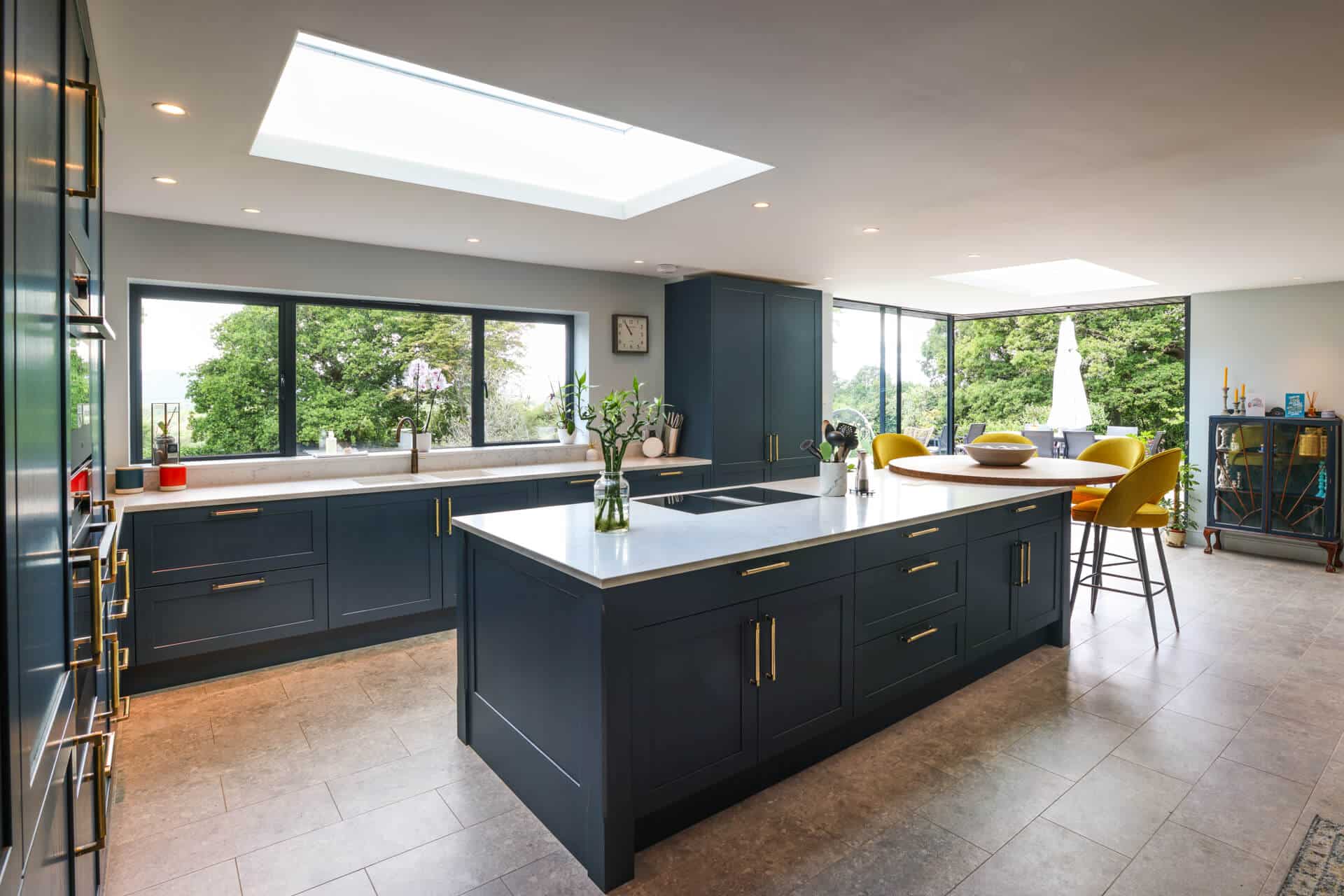
It is easy to spend weeks choosing cabinet colours, worktops and appliances, only to leave the floor as an afterthought. Yet in a bespoke kitchen, the flooring works harder than almost anything else in the room. It has to withstand spilt water, dropped pans, dragged chairs and years of daily footfall, all while looking good enough to tie the whole design together. Getting it right from the start saves a lot of frustration (and expense) further down the line.
Why Kitchen Flooring Deserves as Much Thought as Your Units
Your kitchen floor sits at the centre of one of the busiest rooms in the house. It needs to cope with heat from the oven, moisture from the sink and dishwasher, and constant traffic from family and pets. On top of that, it needs to complement your cabinetry, worktops and overall style, whether that is a sleek modern kitchen or a warmer classic kitchen design. Choosing the wrong material can mean scratches, staining or a floor that simply feels cold and uninviting underfoot.
The Most Popular Kitchen Flooring Options
There is no single “best” kitchen floor. The right choice depends on your budget, your household and how your kitchen connects to the rest of your home. Here is how the most popular options compare.
| Flooring Type | Durability | Underfloor Heating | Maintenance | Typical Cost |
|---|---|---|---|---|
| Porcelain tile | Excellent | Yes | Low | Mid to high |
| Engineered wood | Good | Yes, with the right specification | Medium | Mid to high |
| Luxury vinyl tile (LVT) | Very good | Yes | Low | Low to mid |
| Natural stone | Excellent | Yes | Medium to high | High |
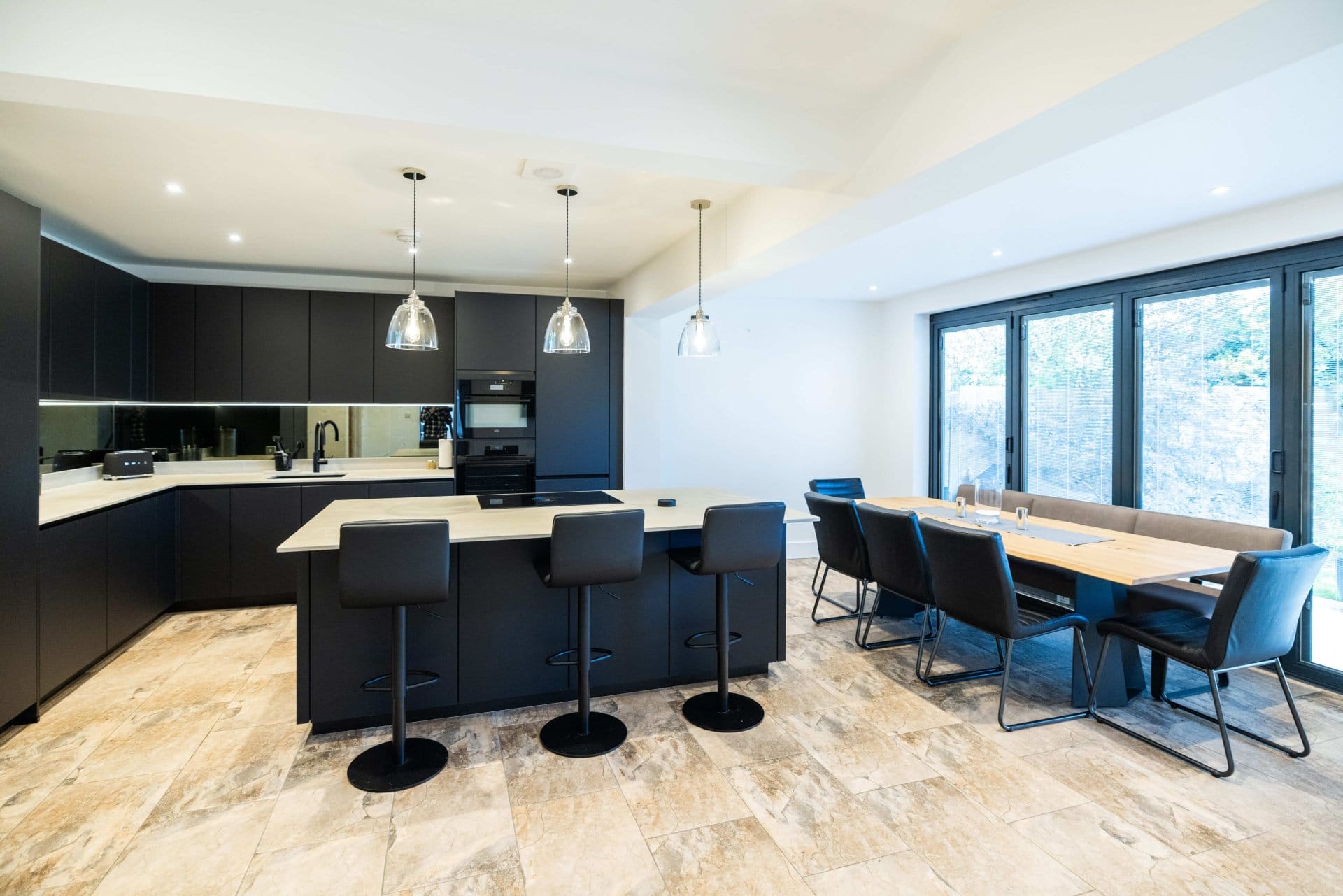
Porcelain tile is a firm favourite for busy family kitchens thanks to its resistance to scratches and spills, while engineered wood brings warmth to open-plan spaces that flow into a living or dining area. LVT has come a long way in recent years, offering the look of wood or stone at a lower cost and with far easier upkeep. Natural stone remains a beautiful, premium choice, particularly in classic or country-style kitchens, though it does need sealing and a little more care.
Underfloor Heating and Flooring Compatibility
If you are planning a new kitchen, underfloor heating is well worth considering, and it changes how you should think about flooring. Porcelain, stone and LVT all conduct heat well and respond quickly, making them ideal partners for underfloor systems. Engineered wood can also work, but the specification matters, so it is worth discussing this with your designer at an early stage rather than after the floor has already been chosen.
Matching Your Flooring to Your Kitchen Style
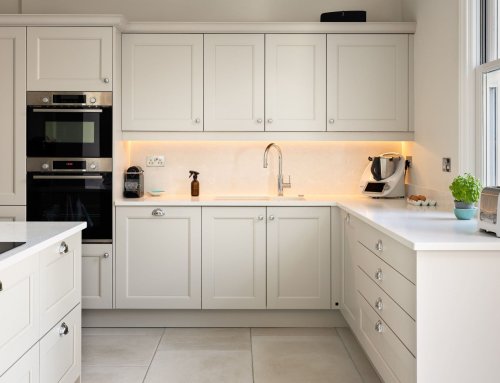
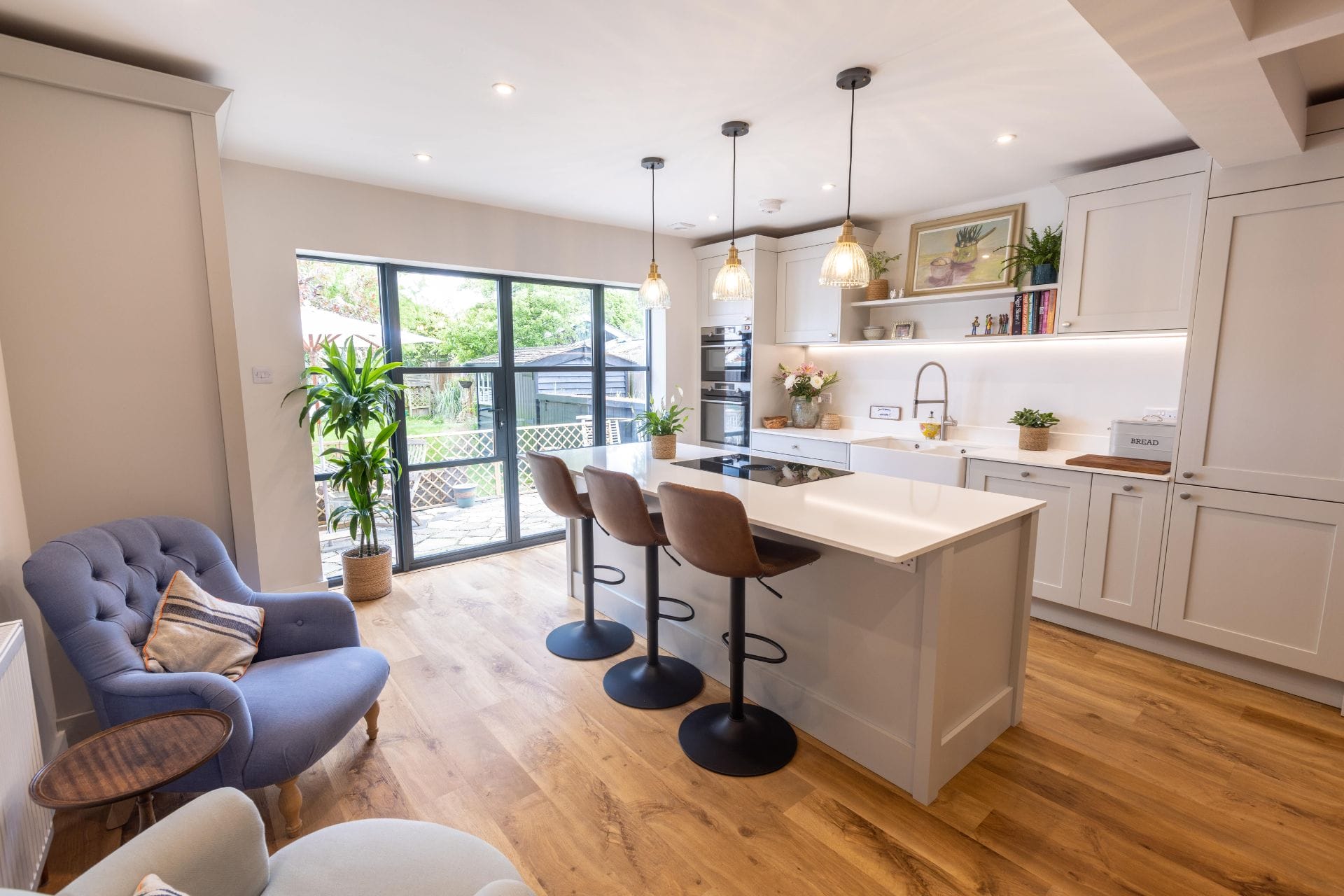
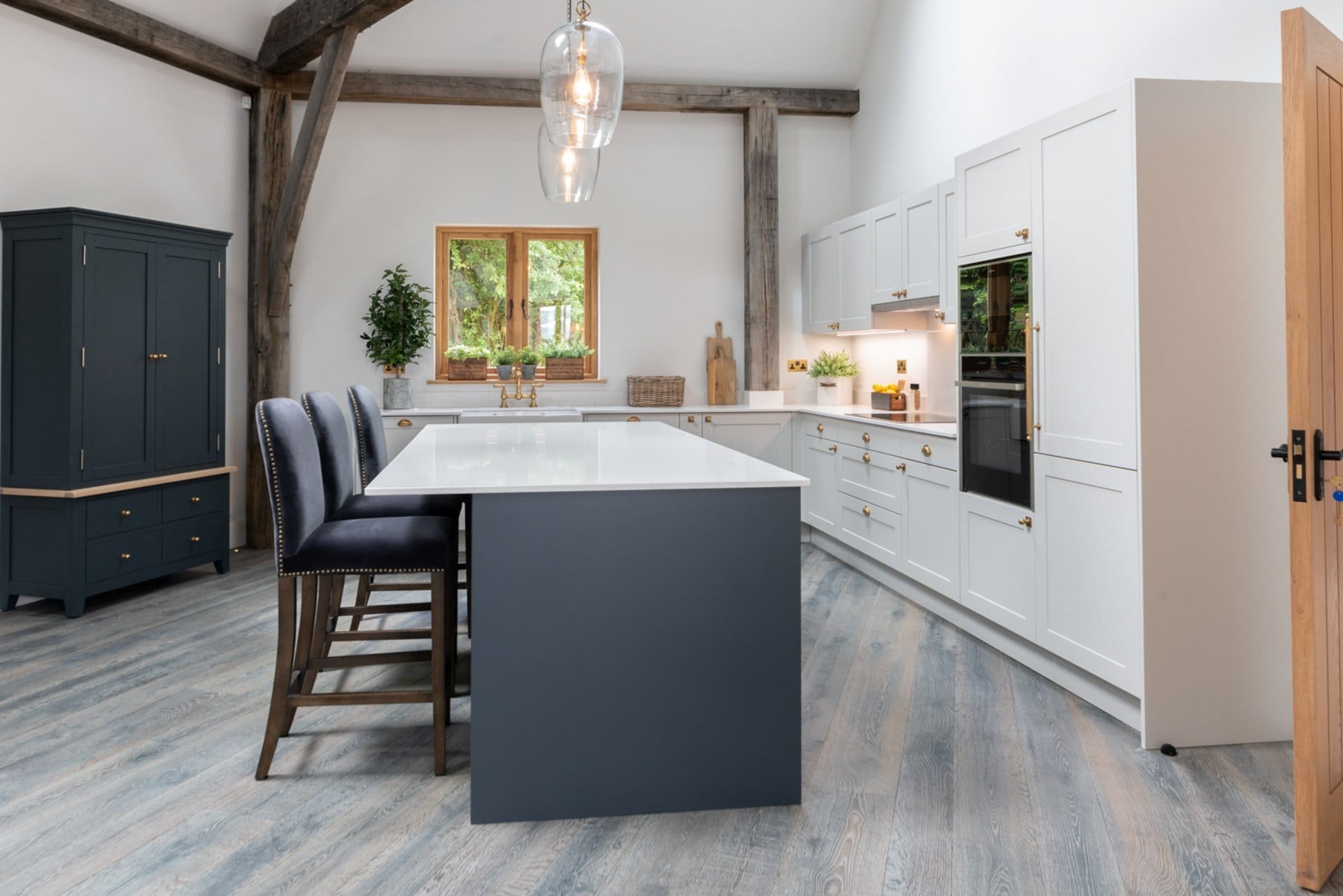
Flooring should feel like part of the overall design, not an add-on. Large-format porcelain tiles in a light grey or stone tone suit sleek, handleless kitchens beautifully, while wide wood boards bring character to a classic or Shaker-style kitchen. If your kitchen opens onto a living or dining space, choosing a floor that runs consistently through both areas helps the whole room feel connected and considered.
Practical Considerations: Durability, Maintenance and Family Life
Beyond looks, think honestly about how your household uses the space. Homes with young children, pets or a lot of foot traffic will benefit from a harder-wearing, low-maintenance option such as porcelain or LVT. If you love the warmth of real wood and are prepared for a little extra care, engineered wood remains a wonderful choice. Whatever you choose, it is worth seeing samples in your own kitchen lighting before you commit, which is exactly the kind of detail our designers walk you through as part of our project management service.
If you would like to see flooring, worktops and cabinetry together in person, book a visit to our Chertsey showroom or browse our gallery for inspiration from recent projects. When you are ready to talk through your own kitchen, get in touch with our team.
Frequently Asked Questions
What is the most durable flooring for a family kitchen?
Porcelain tile is generally the most durable option, resisting scratches, stains and heavy footfall while remaining low maintenance.
Can all kitchen flooring be used with underfloor heating?
Porcelain, LVT and natural stone all work well with underfloor heating. Engineered wood can too, but the specification needs to be checked carefully first.
Is luxury vinyl tile a good choice for a bespoke kitchen?
Yes. Modern LVT offers realistic wood and stone finishes, strong durability and easy maintenance, making it a popular choice for many budgets.
Should my kitchen and living area have matching flooring?
If your kitchen is open-plan, running the same or a complementary floor through both spaces helps them feel like one connected room.
When should I choose my kitchen flooring during the design process?
As early as possible. Flooring affects underfloor heating specification, cabinet plinths and how the whole room comes together, so it is best decided alongside your cabinetry rather than after.