How to Choose the Right Kitchen Worktop: A Complete Guide
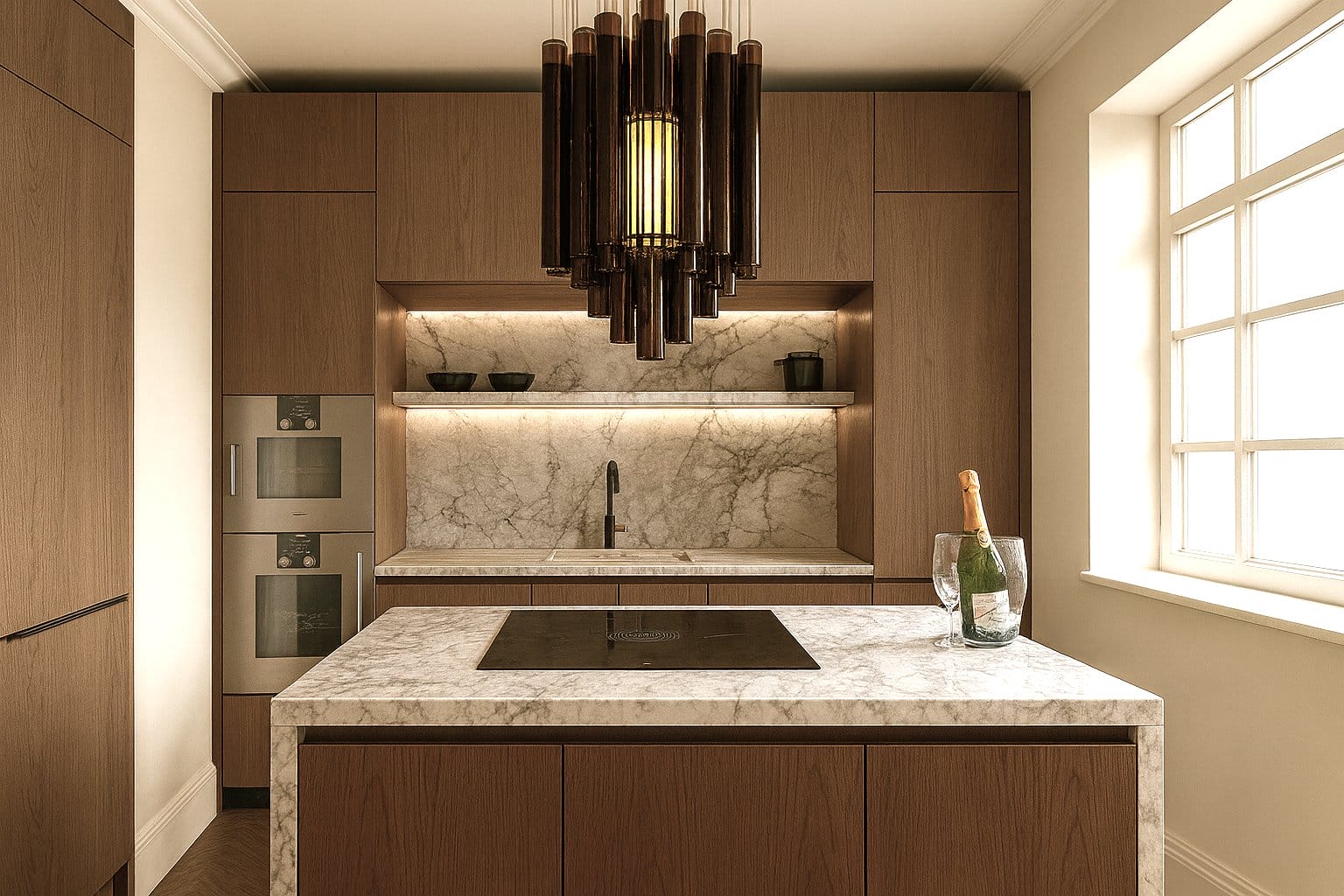
If there’s one decision in a kitchen design that clients spend the most time deliberating over, it’s the worktop. And rightly so. Your worktop is one of the most visible, most touched and most used surfaces in your entire home. Get it right and it ties the whole kitchen together. Get it wrong and it’s something you’ll notice every single day.
At Artizan Interiors, we guide our clients through this decision on every project we work on. Here’s what we’ve learnt about choosing a worktop that looks beautiful, works hard and stands the test of time.
Why the Worktop Decision Matters So Much
A worktop isn’t just a surface. It’s a focal point, a practical workspace and a significant contributor to the overall feel of your kitchen. It also needs to work in harmony with your cabinetry, flooring, splashback and appliances.
The sheer number of materials available can feel overwhelming, but once you understand what each one offers and what it asks of you in return, the decision becomes much more straightforward.
The Main Worktop Materials Explained
Quartz
Quartz is currently one of the most popular worktop choices, and it’s easy to understand why. It’s an engineered stone, meaning it’s manufactured to a consistent standard and is available in an enormous range of colours and finishes, from marble-effect veining to solid matt tones.
Quartz is non-porous, which means it doesn’t need sealing and is highly resistant to stains from everyday cooking. It’s also extremely durable and holds up well to the demands of a busy kitchen. The one thing to be aware of is that quartz can be damaged by excessive heat, so using trivets and pan stands is advisable.
If you want a high-end look that’s low maintenance and reliable, quartz is very hard to beat.
Granite
Granite is a natural stone, which means every slab is completely unique. It brings a depth and character to a kitchen that engineered materials can’t fully replicate, and it’s extraordinarily durable when properly sealed. Granite handles heat well, is scratch resistant and, with appropriate care, will look stunning for decades.
The trade-off is maintenance. Natural granite is porous and needs to be sealed on installation and periodically thereafter to prevent staining. For clients who want the genuine article and are prepared to look after it, granite remains a wonderful choice.
Porcelain
Porcelain worktops have grown significantly in popularity over recent years, and for good reason. They’re available in very large format slabs, which means they can run the full length of a kitchen with minimal joins. They’re also highly resistant to heat, scratches and staining, and they’re easy to clean.
Porcelain is particularly well suited to contemporary kitchens and pairs beautifully with handleless cabinetry and integrated appliances. It can also be used to create a seamless visual flow between the worktop and matching wall panels or splashbacks.
Solid Wood
Solid wood worktops bring warmth and character to a kitchen in a way that stone and engineered materials simply don’t. They’re particularly well suited to classic kitchen designs, where they complement painted cabinetry and traditional details beautifully.
Wood does require more maintenance than stone options. It needs oiling regularly to prevent drying and cracking, and it should be kept away from standing water. However, one of the great advantages of a solid wood worktop is that it can be sanded back and re-oiled if it picks up marks or staining over the years, giving it a longevity that other materials can’t match.
Dekton and Sintered Stone
Dekton is a relatively newer material, but it’s earned considerable respect in the industry. It’s an ultra-compact sintered surface that’s exceptionally resistant to heat, UV light, scratches and staining. It can be used outdoors as well as indoors, making it a particularly versatile choice for open-plan spaces that connect to gardens or terraces.
Dekton is available in a wide range of finishes, many of which closely replicate natural stone, and it requires very little maintenance. It tends to sit at the premium end of the budget, but for clients who want maximum performance and minimal upkeep, it’s an excellent investment.
Matching Your Worktop to Your Kitchen Style
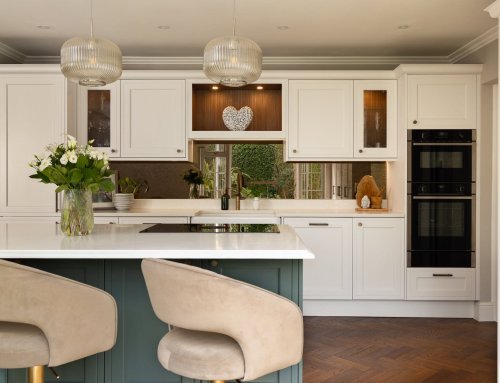
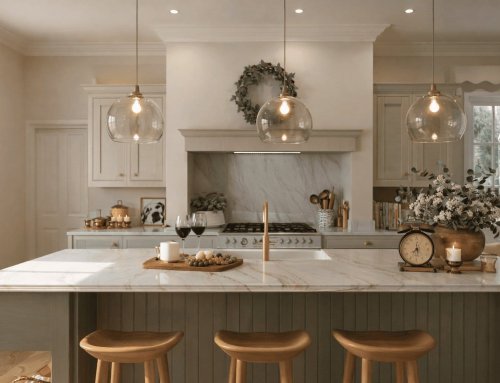
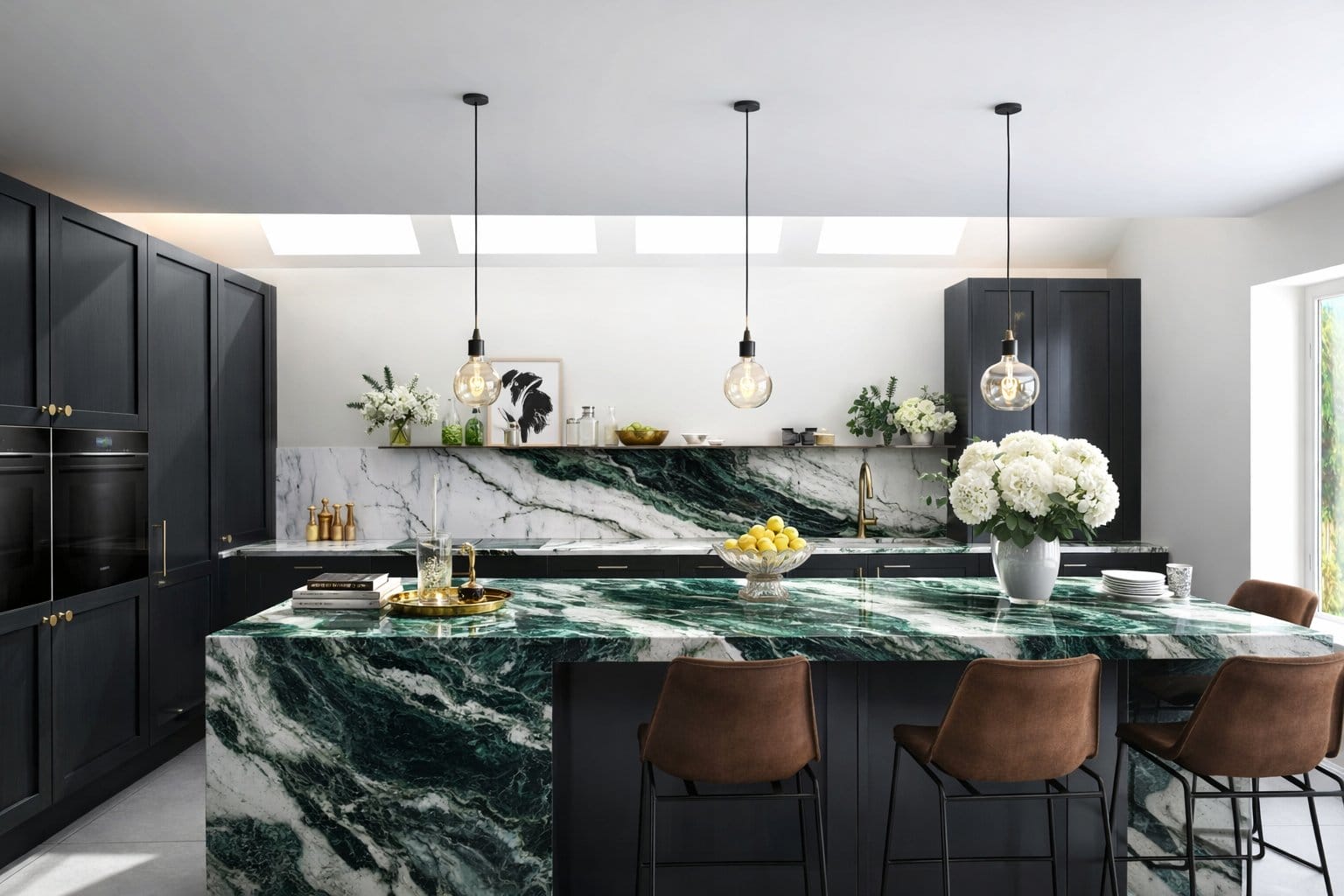
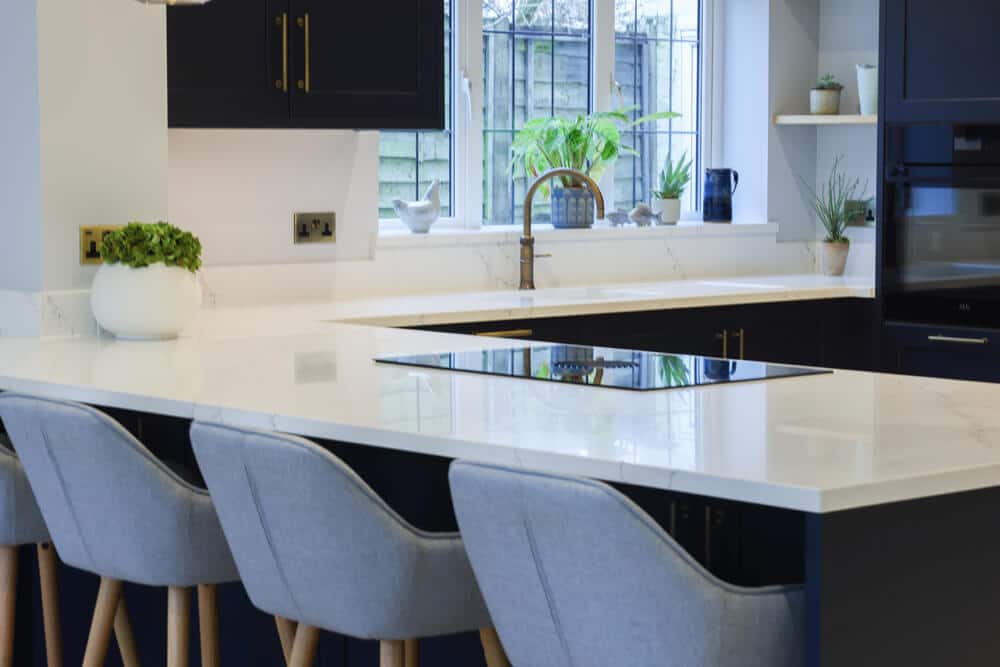
The material is only part of the equation. The colour and finish of your worktop needs to work with the rest of your kitchen design. As a general rule, lighter worktops open a space up and work well in kitchens that already have strong tonal contrasts in the cabinetry. Darker worktops add drama and work particularly well against lighter units. A marble-effect surface can add luxury to both modern and classic designs, while a solid concrete-effect tone suits a more industrial or contemporary aesthetic.
Our design team will work through all of these considerations with you during the design process. You can also see a range of worktop options in person at our Chertsey showroom.
Practical Considerations Before You Decide
Beyond aesthetics, it’s worth thinking about a few practical questions before committing to a worktop material. How much cooking do you actually do? If your kitchen sees serious daily use with pans coming straight from the hob, heat resistance should be a priority. Do you have young children? A non-porous, easy-clean surface might save you significant headaches. How do you feel about ongoing maintenance? Some materials ask very little of you; others reward care with longevity.
These are exactly the kinds of questions we explore during our design consultations at Artizan Interiors. Getting a clear picture of how you actually live in your home is as important as knowing what you want it to look like.
Ready to Explore Your Options?
Whether you’re at the very start of planning a new kitchen or you’re deep into the detail of a specific design, we’d love to help you navigate the worktop decision. Visit our showroom to see and touch real materials, or get in touch to arrange a consultation with our design team.
Frequently Asked Questions
Which kitchen worktop material is the most durable?
Dekton and porcelain are among the most technically durable materials available, offering excellent resistance to heat, scratching and staining. Granite and quartz are also extremely hard-wearing with appropriate care. The most durable choice for your kitchen will depend on how you use it and how much maintenance you’re prepared to do.
Can I mix worktop materials in the same kitchen?
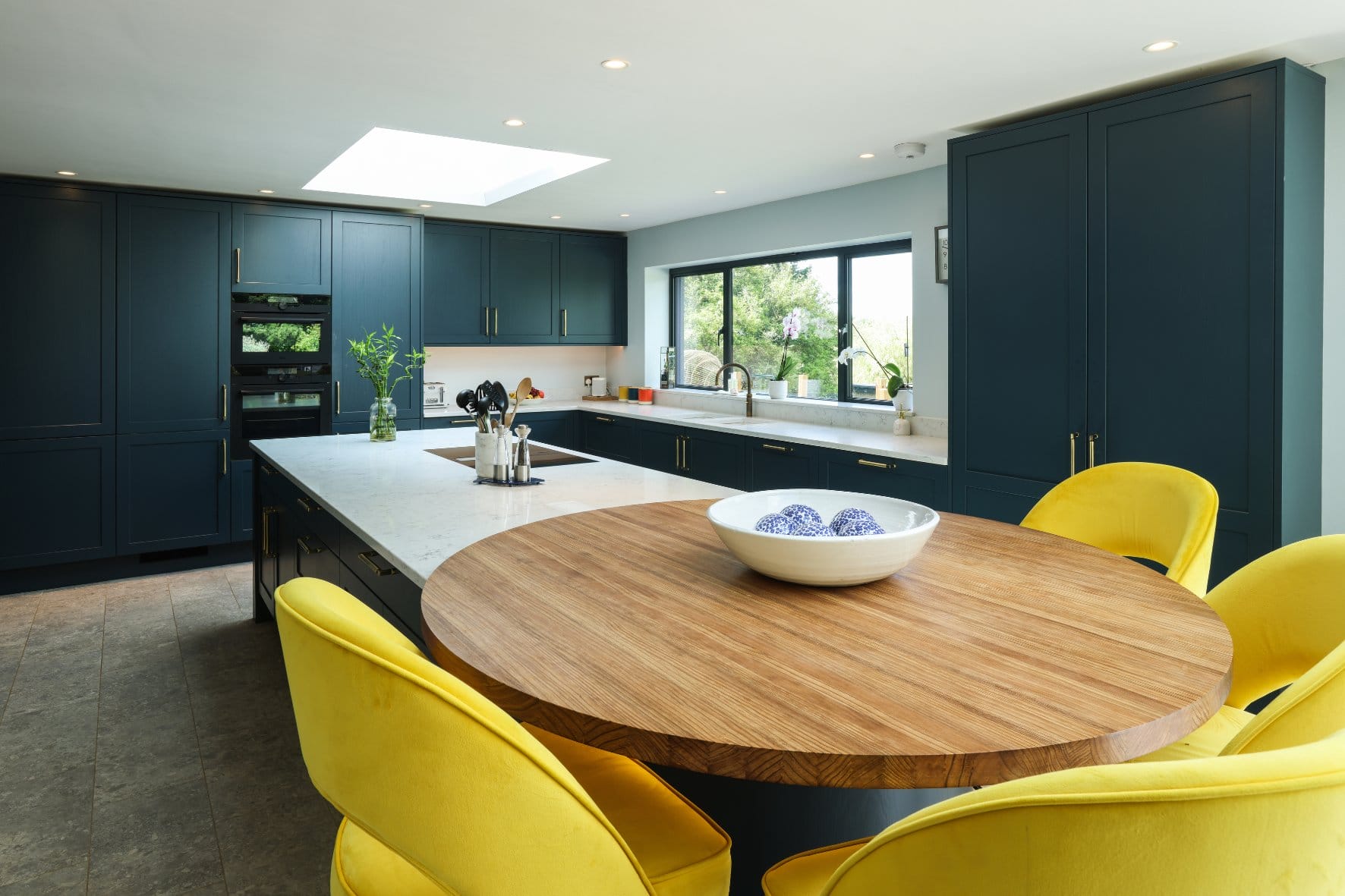
Yes, and it’s increasingly popular to do so. A common approach is to use a stone or engineered surface for the main run of worktops and solid wood on a kitchen island, which adds warmth and contrast. Our design team can advise on combinations that work well together.
How thick should a kitchen worktop be?
Standard worktop thickness is typically 20mm or 30mm, though some materials such as porcelain and Dekton can be supplied in slimmer profiles that create a more refined, contemporary look. We’ll recommend the right thickness for your design during the consultation.
Do I need to seal a quartz worktop?
No. Quartz is non-porous and doesn’t require sealing, which is one of its main practical advantages. Natural stone worktops such as granite and marble do require sealing on installation and periodically thereafter.
How do I book a kitchen design consultation with Artizan Interiors?
Simply get in touch via our contact page or give us a call on 01932 640019. We’ll arrange a time to discuss your project and invite you to visit our showroom in Chertsey to explore the options in person.