Open-Plan Living: How to Design a Kitchen-Diner That Really Works
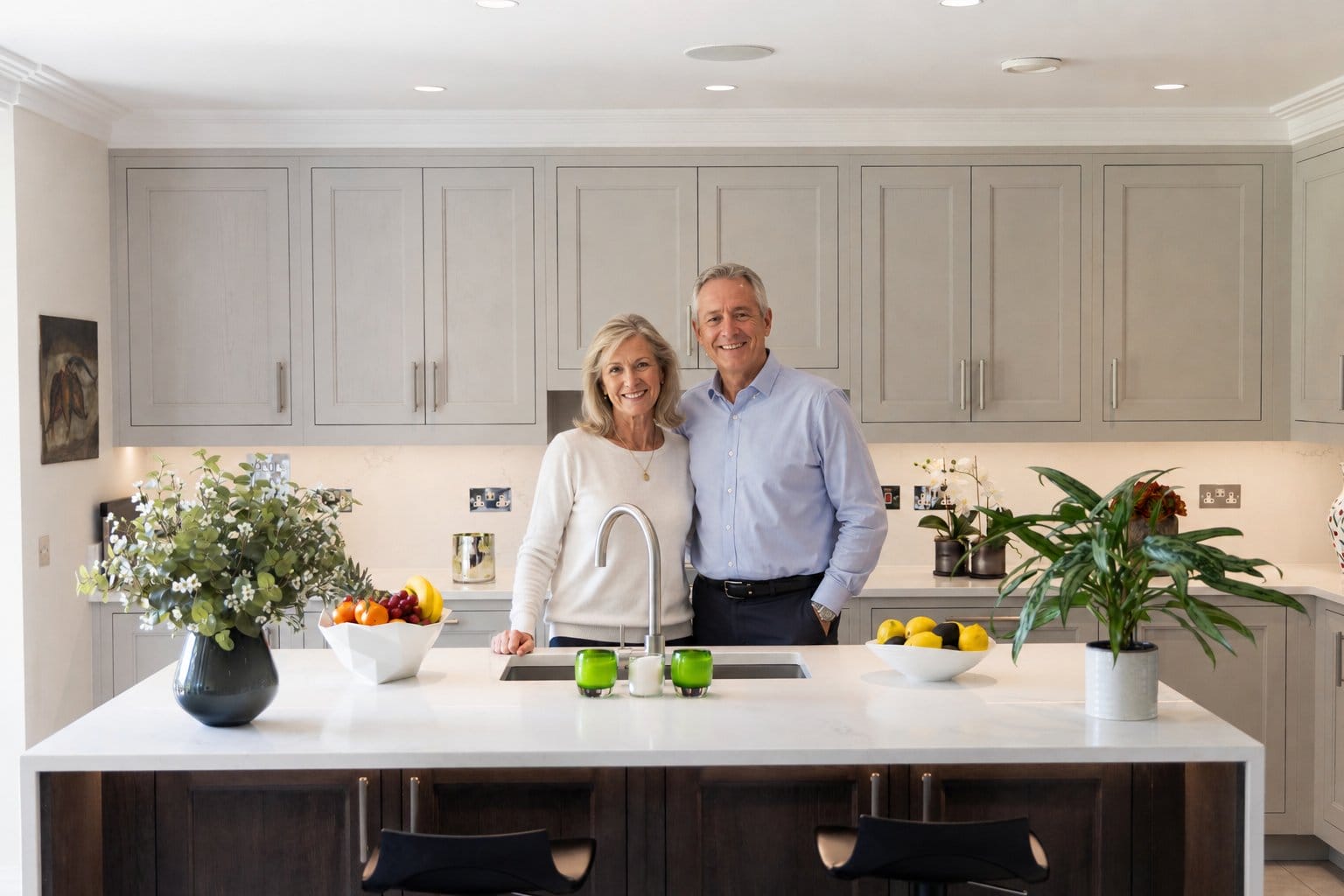
Open-plan living has become one of the most sought-after features in British homes. The appeal is obvious. Knocking through between a kitchen, dining area and living space creates a sense of light, flow and connection that a series of separate rooms simply can’t match. It’s where family life happens, where friends gather, and where the boundaries between cooking, eating and relaxing become pleasantly blurred.
But an open-plan space that truly works doesn’t happen by accident. It takes careful thought, considered design and a real understanding of how you and your family actually use your home. At Artizan Interiors, we’ve designed a great number of open-plan kitchen-diners across Surrey and the surrounding area, and here’s what we know makes the difference between a space that works beautifully and one that simply feels like a big room.
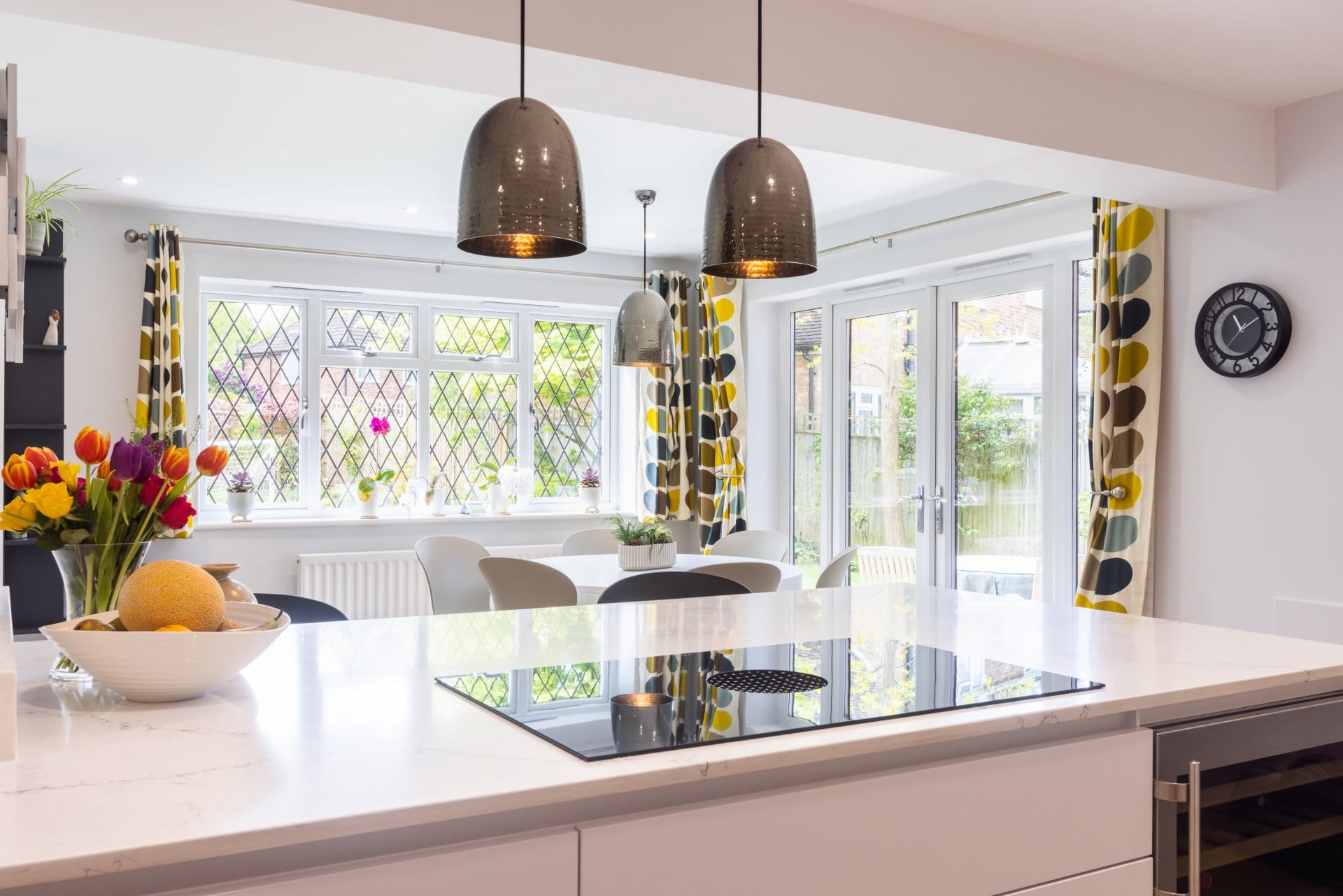
Start With How You Actually Live
Before any design decisions are made, the most important question is a practical one: how do you use the space day to day?
Do you cook while the children do homework at the kitchen table? Do you want to be part of the conversation when you’re preparing food? Is the television important in the living area, and do you want to be able to see it from the kitchen? Do you host regularly, and does that mean you need space for a dining table that seats eight? The answers to these questions shape everything from the kitchen layout to where the island sits, how the dining zone is defined and where the living area begins. At Artizan Interiors, we spend time asking exactly these questions before a single design decision is made.
Zoning: The Secret to a Successful Open-Plan Space
One of the most common misconceptions about open-plan living is that removing walls means everything simply flows together. In reality, the best open-plan spaces work because they have clearly defined zones within the larger space. Without that definition, a large room can feel confusing and difficult to furnish well.
Defining the Kitchen Zone
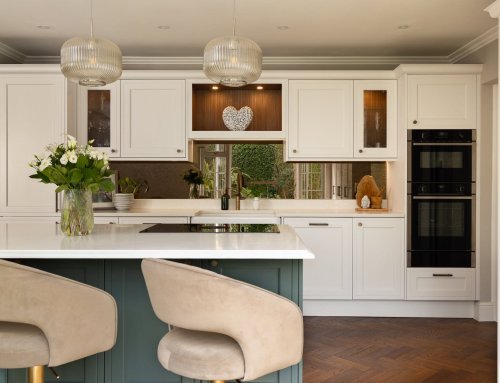
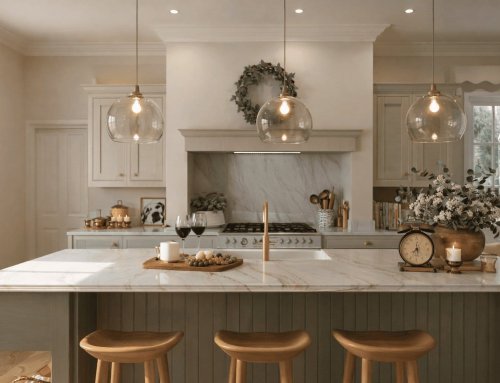
The kitchen zone is usually the easiest to define because cabinetry and appliances create natural boundaries. A kitchen island is one of the most effective tools for this, acting as both a practical workspace and a visual divider between the kitchen and the rest of the space. If you’re considering a kitchen island, our dedicated blog on kitchens and kitchen islands covers the key considerations in detail.
Defining the Dining Zone
The dining area benefits from its own sense of identity within the open plan. This can be achieved through a pendant light above the dining table, a change of flooring material, or a carefully positioned rug. These elements signal that this is a distinct space with its own purpose, even though it sits within the larger room.
Defining the Living Zone
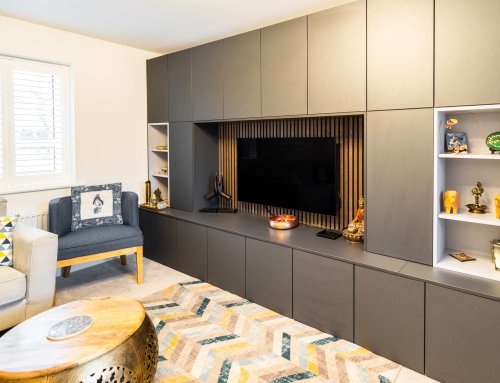
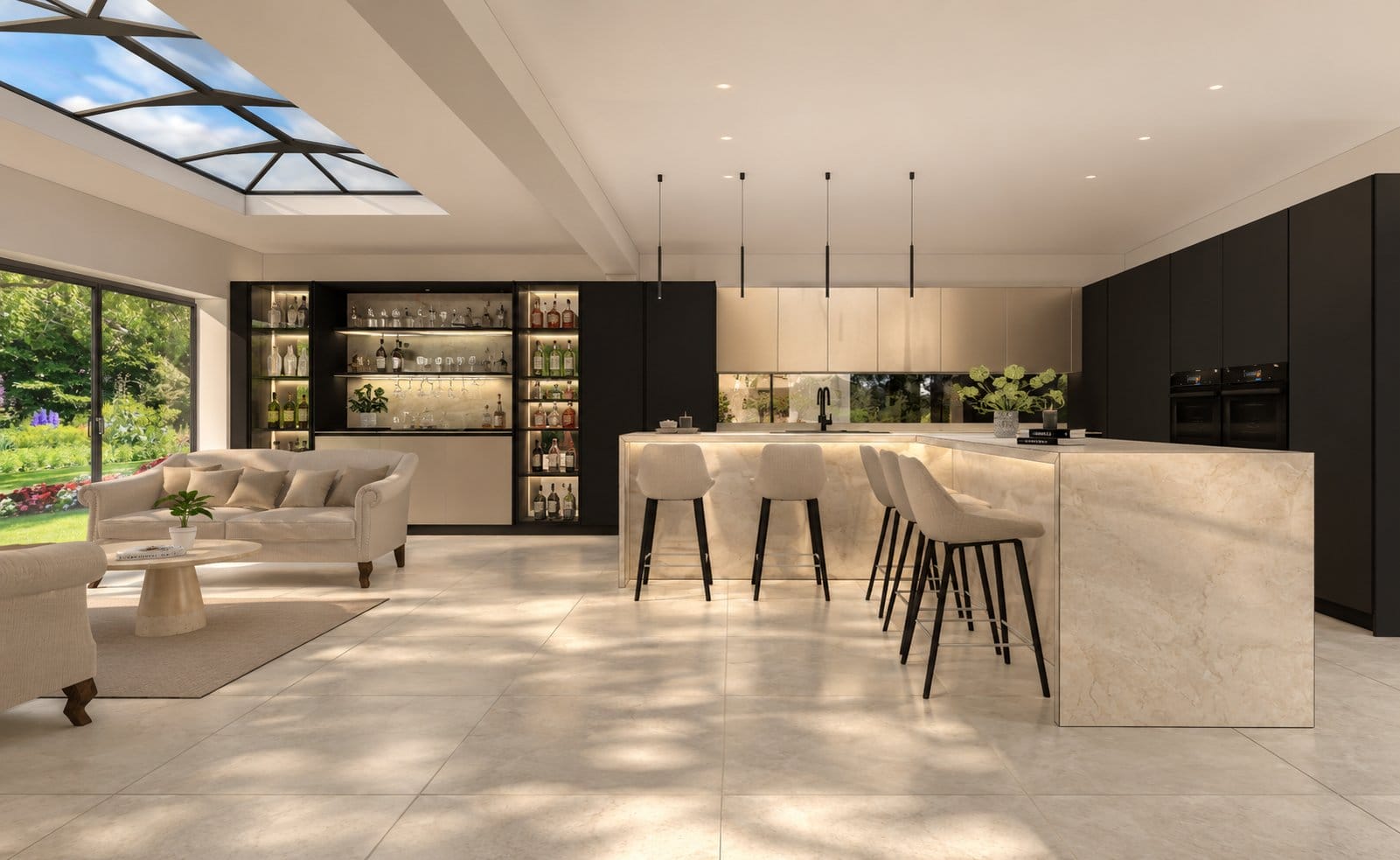
At the far end of the space from the kitchen, the living area should feel relaxed and distinct. Sofas, rugs and a considered approach to media wall or storage unit design all help to anchor the space and give it a cohesive feel.
Lighting Is Everything
In an open-plan space, lighting needs to work harder than in any other room in the house. You need task lighting over the kitchen worktops, ambient lighting for the dining area, and softer, warmer lighting for the living zone. Ideally, all of these should be on separate circuits so you can adjust the atmosphere as the day and evening progress. Our dedicated blog on kitchen lighting explores the different lighting layers in more detail, but the key principle is this: plan your lighting at the same time as your layout, not as an afterthought.
Acoustics and Practical Realities
Open-plan spaces are wonderful for connection, but they do come with some practical considerations worth planning for. Kitchen noise, cooking smells and the sound of the television can all travel more freely than in a traditional layout.
A good extraction system is essential, both for dealing with cooking odours and for the general comfort of anyone sitting in the living or dining zones. We work with leading appliance brands including Novy and Bora, both of which offer highly effective and beautifully designed extraction solutions.
Soft furnishings, rugs and upholstery also help to absorb sound and prevent a large space from feeling echoey, which is something worth thinking about when choosing furniture for the living and dining zones.
Connecting Inside and Outside
For many homeowners, the motivation for creating an open-plan space is as much about connecting with the garden as it is about the interior itself. Bi-fold or sliding glass doors at the end of an open-plan kitchen-diner can be transformative, creating a seamless flow between inside and outside during the warmer months.
If you’re planning a connection to the garden, it’s worth thinking about the flooring material carefully. A continuous surface that runs from inside to outside, or at least a very close match in tone, will make the space feel significantly larger and more cohesive.
Getting the Design Right From the Start
Open-plan living done well is one of the most rewarding things you can do for your home. The key is to work with designers who understand not just how kitchens work, but how the wider living space needs to function around them. At Artizan, our expertise spans kitchens, living spaces and fitted bedrooms, which means we can take a genuinely holistic view of your home when designing a space like this.
If you’re considering an open-plan project, we’d love to talk it through with you. Get in touch or visit our showroom in Chertsey to see how we approach this kind of project.
Frequently Asked Questions
Do I need planning permission to create an open-plan living space?
In most cases, removing internal walls between existing rooms doesn’t require planning permission, though you will need to ensure any structural work is carried out safely and in compliance with building regulations. We always recommend consulting a structural engineer before removing load-bearing walls, and our project management service can help coordinate this as part of the wider project.
Will an open-plan layout make my home harder to heat?
A larger open space does require more thought around heating, but modern underfloor heating and well-positioned radiators can manage this effectively. The energy efficiency of your glazing is also important if you’re incorporating bi-fold or sliding doors. We’ll factor these considerations into the design from the outset.
How do I prevent cooking smells spreading through an open-plan space?
A high-quality extraction system is the most effective solution. We work with premium appliance brands including Novy and Bora, both of which offer powerful and discreet extraction options designed for exactly this kind of space.
Can Artizan design the whole open-plan space, not just the kitchen?
Absolutely. Our expertise covers kitchens, living spaces and bespoke fitted furniture throughout the home. We’re well placed to design the kitchen, dining area and living zone as one cohesive project, which is always the best approach for an open-plan space.
What’s the best way to start planning an open-plan kitchen-diner project?
The best first step is a conversation with our design team. Get in touch here or visit us at our Chertsey showroom and we’ll help you work through the possibilities for your home.