Downdraft vs Ceiling Extractors: Which Is Right for Your Kitchen?
Extraction is one of those decisions that rarely gets the attention it deserves during the early stages of planning a kitchen. Most people spend their energy on doors, worktops and colours, then choose an extractor towards the end. Yet the way you remove steam and cooking smells affects how the room looks, how it sounds, how the layout works and how pleasant the space feels every single day.
The two options we are asked about most are downdraft extractors, which pull air down through or beside the hob, and ceiling extractors, which sit flush in the ceiling above. Both can work beautifully. Both have limitations. The right choice depends on your layout, your ceiling, the way you cook and how open your kitchen is to the rest of the house.
Here is what we have learnt from designing kitchens with both.
What Is a Downdraft Extractor?
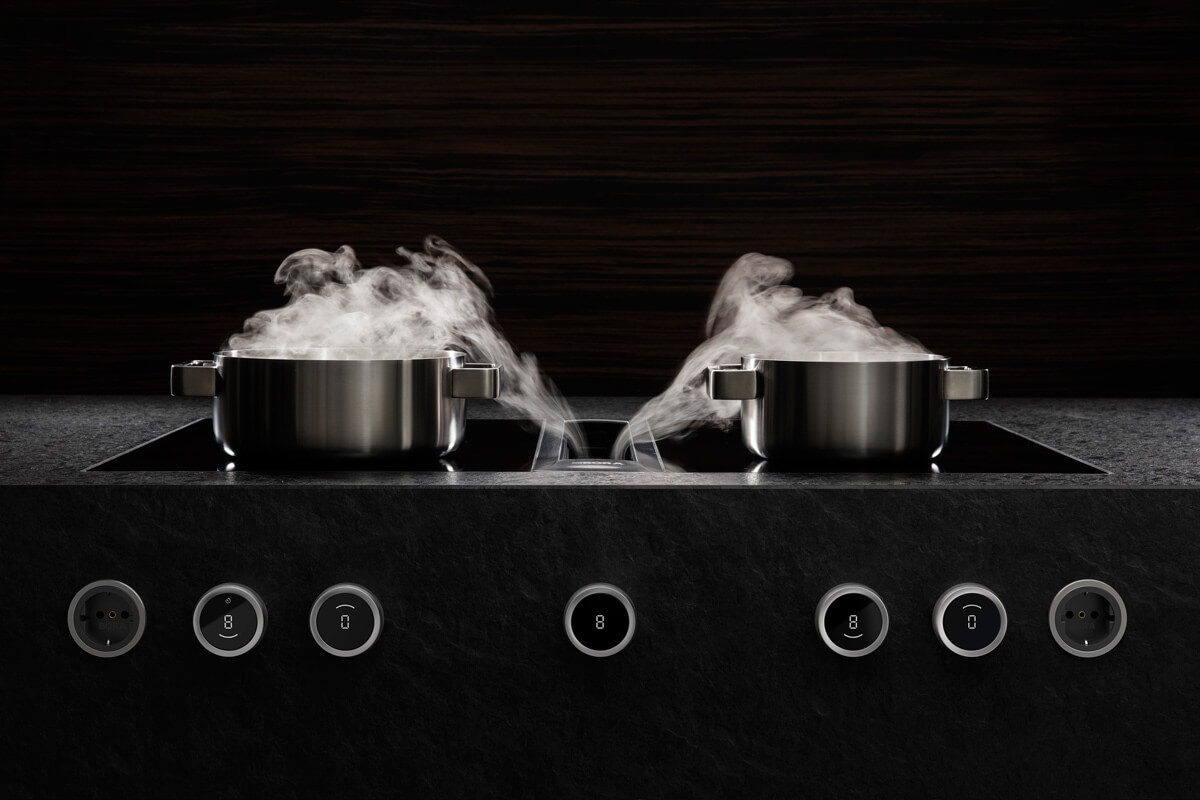
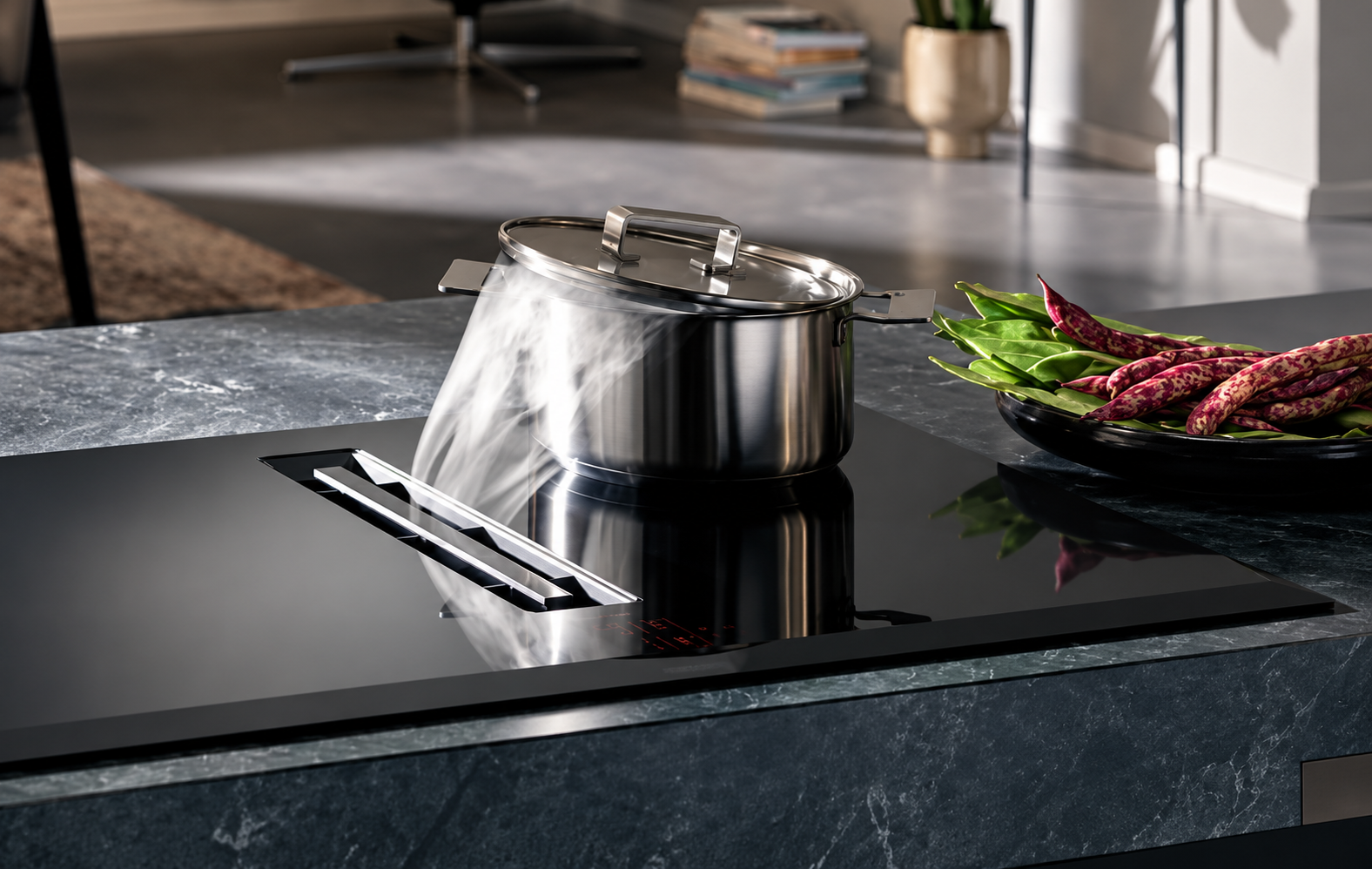
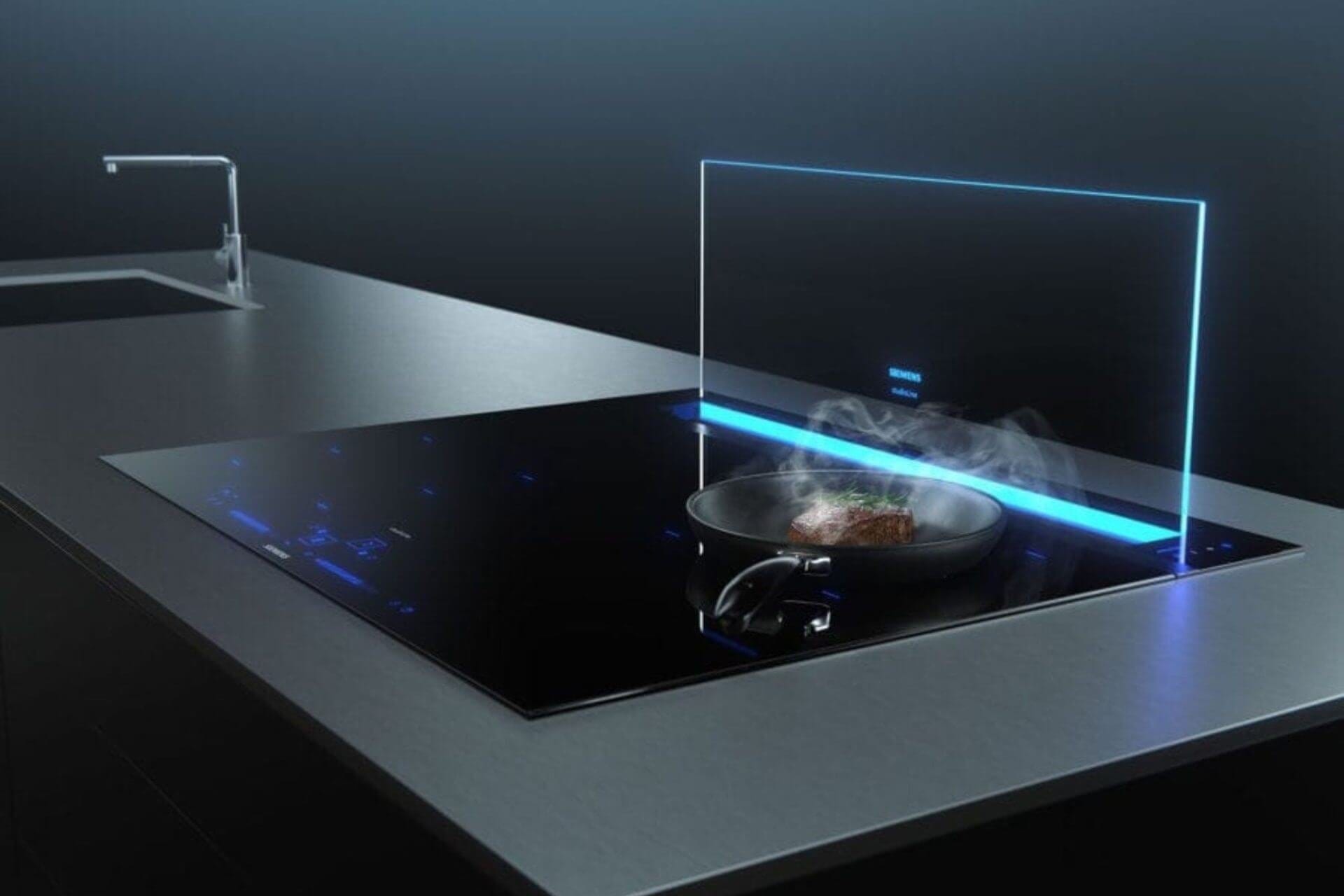
A downdraft extractor removes steam and smells at hob level, pulling them downwards before they rise into the room. Some are built directly into the centre of the hob. Others rise up from behind the hob when needed and drop away when you have finished cooking.
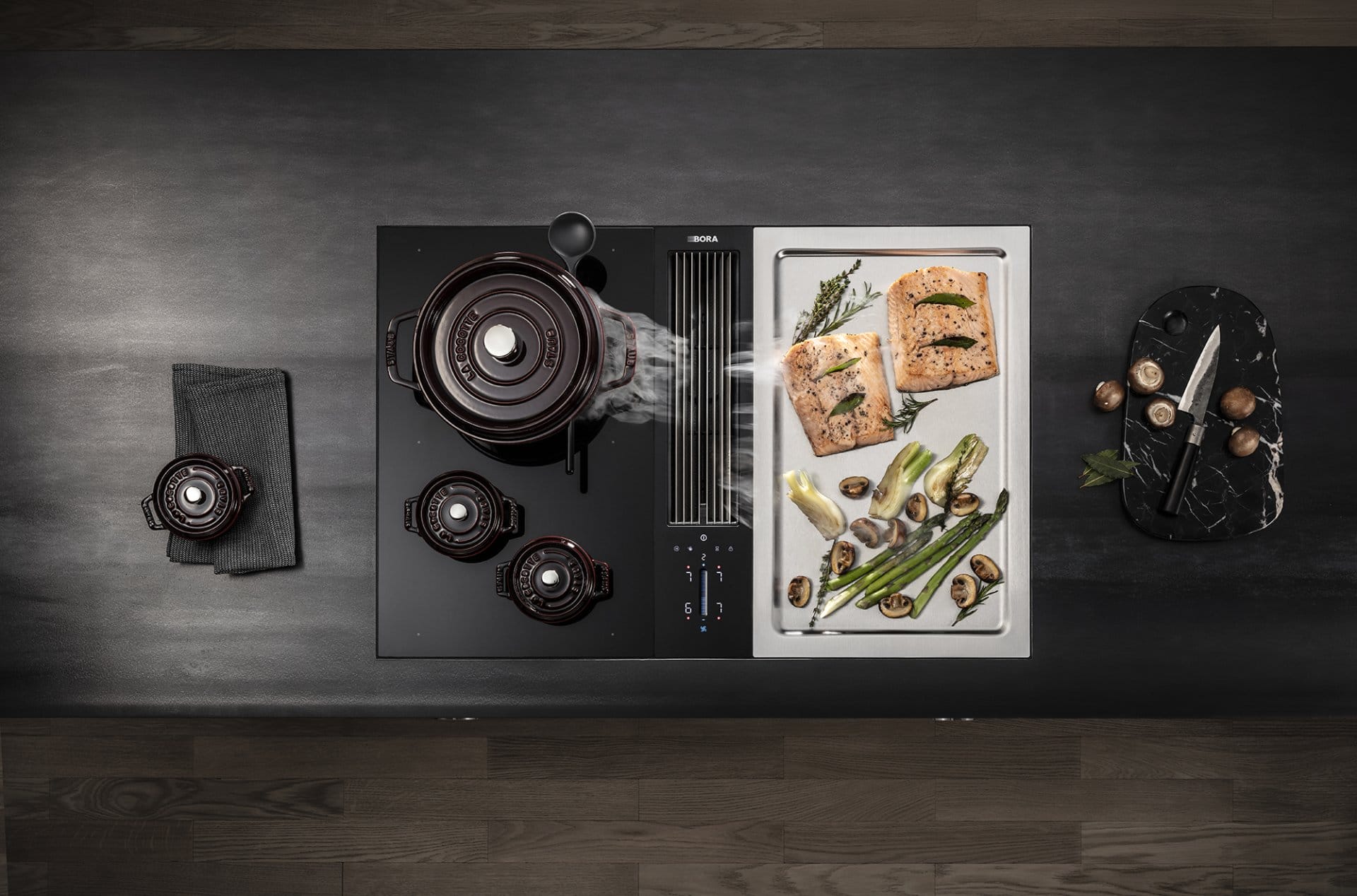
Their great appeal is that nothing hangs above the cooking area. That makes them a popular choice for islands, where a traditional hood can block the view across an open-plan space. Brands such as BORA have built their reputation on this approach, and BORA systems can be fitted on an island, a peninsula or a wall run.
What Is a Ceiling Extractor?
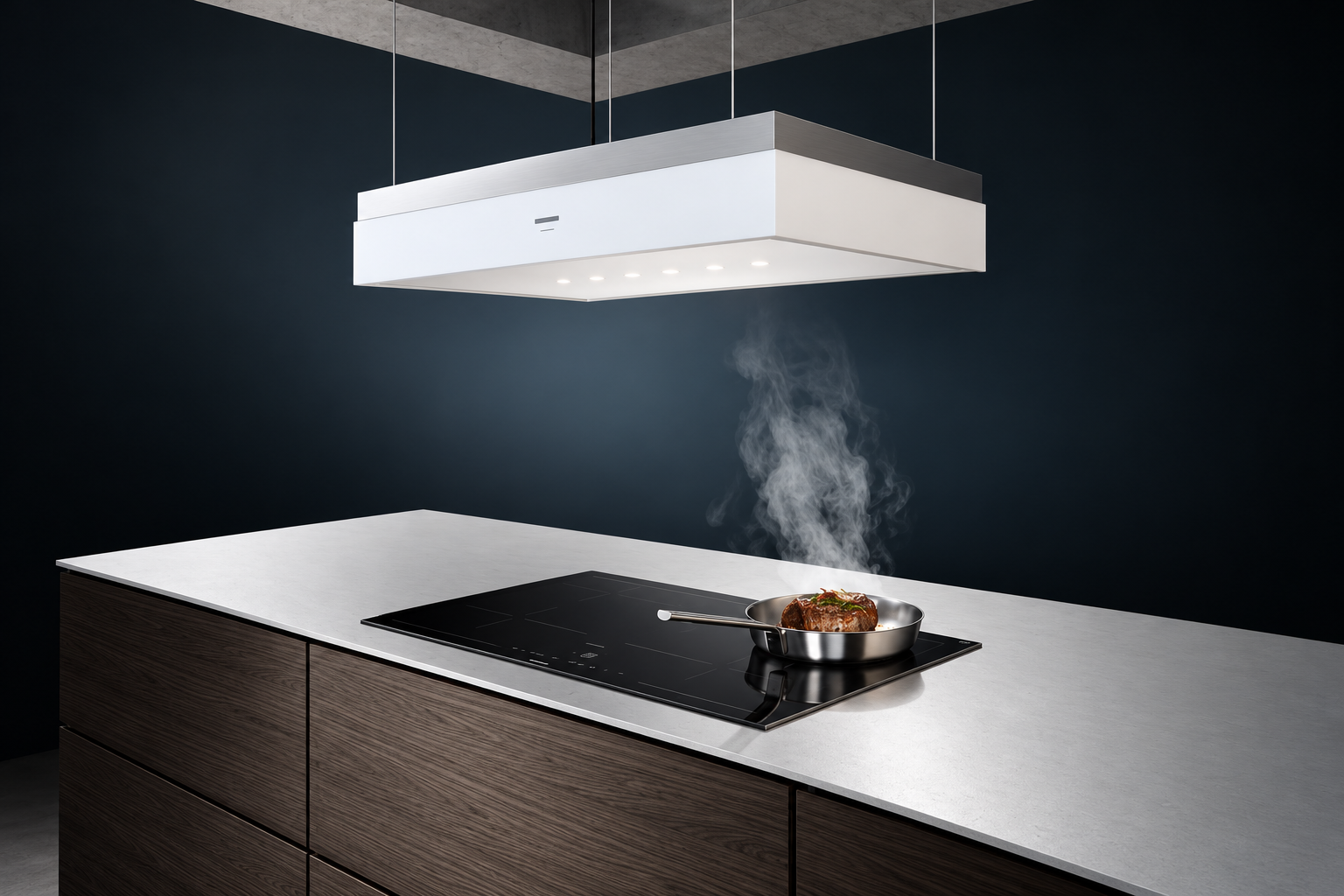
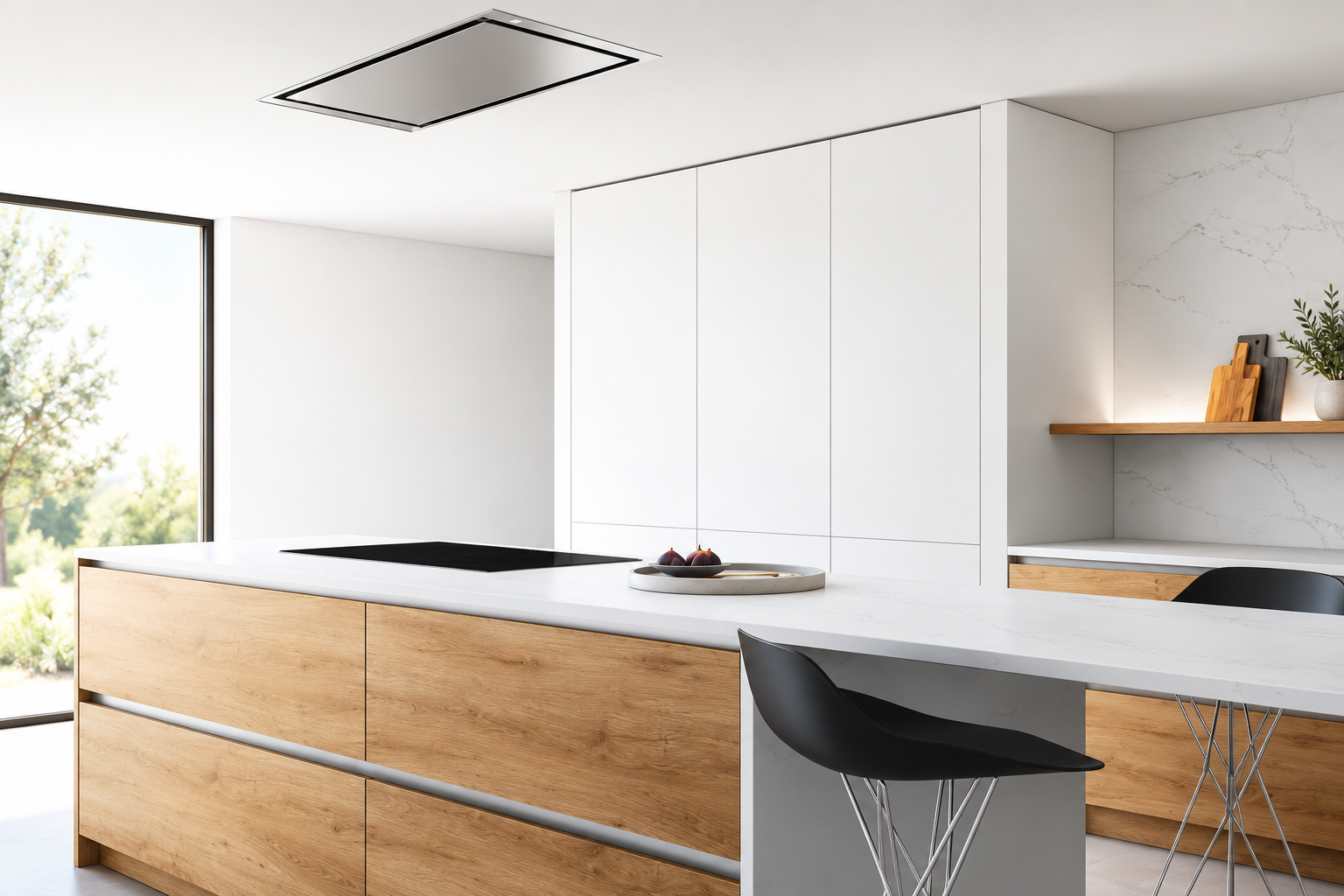
A ceiling extractor is built into the ceiling directly above the hob, sitting almost flush so it is barely noticeable. Many include integrated lighting and are operated by remote control or linked to the hob so they switch on automatically.
Because they work with the natural movement of rising steam, ceiling extractors leave your hob and your base cabinets completely free. Novy is one of the specialist brands we work with for this type of extraction.
Downdraft vs Ceiling Extractors at a Glance
| Consideration | Downdraft Extractor | Ceiling Extractor |
|---|---|---|
| Visual impact | Nothing above the hob, clear sightlines | Almost invisible, sits flush in the ceiling |
| Storage | Uses some space in the cabinet below the hob | Base cabinets left fully available |
| Ceiling requirements | None | Needs enough depth and a suitable joist direction for ducting |
| Tall pans | Steam from very tall stockpots can escape upwards | Unaffected by pan height |
| Best suited to | Islands, peninsulas, extensions with no ceiling void | Islands with good ceiling access, high ceilings, keen cooks |
| When to plan it | During the kitchen design | Before any ceiling or building work is finished |
The Strengths of Downdraft Extraction
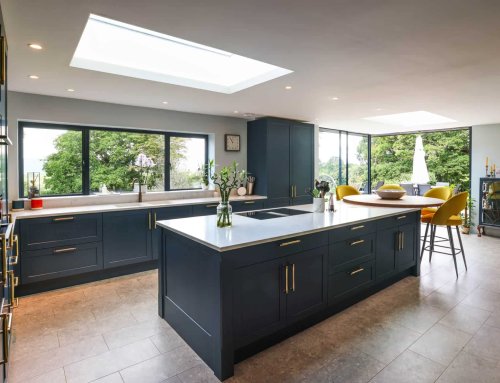
The main reason people choose downdraft is the view. If your island faces the garden or the living area, a hood above it can feel like a barrier. A downdraft keeps everything open, so you can cook while chatting to guests or keeping an eye on children.
Downdraft systems also catch steam close to where it is created, before it has a chance to spread. Modern systems are impressively powerful, and many adjust their extraction automatically according to what is happening on the hob.
They are also a strong solution where a ceiling extractor is simply not possible. Single-storey extensions with flat roofs, vaulted ceilings and rooms with a bedroom or bathroom directly above can all make ceiling ducting difficult. A downdraft removes that problem entirely.
The Strengths of Ceiling Extraction
A ceiling extractor works with physics rather than against it. Steam rises, and the extractor is waiting for it. That makes it a particularly good fit for keen cooks who regularly use large stockpots, wok cooking or several pans at once.
It also leaves your hob as a clean, uninterrupted surface and keeps the cabinet below free for pans, utensils or deep drawers. In a large open-plan room with a generous ceiling height, a well-specified ceiling extractor can be the most discreet option of all.
What We Wish Every Homeowner Knew Before Choosing
Ceiling extraction has to be planned early. This is the single most important point. Ducting for a ceiling extractor needs a route through the ceiling void to an outside wall, and the joists need to run in a helpful direction. If your builder has already plastered the ceiling, adding ducting later can be disruptive. If you are extending or renovating, talk to your kitchen designer before the ceiling is closed up.
Ducted or recirculating makes a real difference. Both types can be ducted to the outside or set up to recirculate air through filters. Ducted extraction removes moisture from the room, which is ideal. Recirculating systems are easier to install but rely on filters that need cleaning or replacing, and they do not remove humidity in the same way. Ask your designer which is realistic for your home, and what the ongoing maintenance looks like.
Downdraft affects the drawers below. A downdraft needs space beneath the hob for its motor and ducting. Good systems are designed to minimise this, and some BORA models only take the space of the top cutlery drawer. Even so, it is worth planning what goes in that area from the start, rather than discovering it during installation.
Noise matters more in open-plan rooms. In a kitchen that flows into a living area, an extractor running at full power can drown out conversation or the television. Ask about noise levels and whether the motor can be positioned remotely. Our article on open-plan kitchen design covers more of the details that make these spaces comfortable.
Lighting needs to work around it. With a ceiling extractor in the middle of the ceiling above the island, pendant lights may not be possible in that spot. Many ceiling extractors include their own lighting, but it is worth thinking about the overall scheme. Our kitchen lighting guide explains how to layer light around an island.
So, Which Should You Choose?
As a general guide, a downdraft is likely to suit you if your hob is on an island with a view you want to keep, your ceiling cannot easily take ducting, or you prefer a clean line of sight across the room.
A ceiling extractor is likely to suit you if you cook often with large pans, you want to keep every base cabinet for storage, and your ceiling has the depth and access for ducting.
In many homes, either could work well, and the decision comes down to how you cook and how the room is used. That is a conversation we have with every client, because extraction affects the island layout, the storage plan and the lighting scheme all at once. It is also a good example of why we design the appliances as part of the kitchen rather than adding them at the end. You can see our full range on our appliances page.
Summary
Downdraft and ceiling extractors both offer a clean, modern alternative to a traditional hood. Downdraft keeps sightlines open and works where ceilings cannot take ducting. Ceiling extraction works with rising steam and leaves your hob and base cabinets free. The best choice depends on your layout, your ceiling and the way you cook, and it is far easier to get right when it is planned early.
If you are weighing up the options, the most useful step is to talk them through with a designer who can look at your plans and your ceiling. Book a design appointment at our Chertsey showroom and our designers will talk you through what will work best in your home.
Frequently Asked Questions
Are downdraft extractors as effective as ceiling extractors?
A well-specified downdraft can be very effective for everyday cooking because it captures steam at the source. Ceiling extractors tend to cope better with very tall pans. The right choice depends on how you cook.
Can I fit a ceiling extractor in a kitchen extension?
Often, yes, but it depends on the roof construction and the route for ducting. It needs to be planned before the ceiling is finished. Our guide to kitchen extensions covers other decisions to make early.
Do downdraft extractors take up cupboard space?
They do need some space below the hob for the motor and ducting. The amount varies by system, and some are designed to only take the space of the top drawer.
Is ducted extraction better than recirculating?
Ducted extraction removes moisture and smells from the house entirely, which is usually the better option. Recirculation is useful where ducting is not possible, but filters need regular maintenance.
Where can I get advice on choosing extraction?
Our Chertsey showroom has full-size working displays, and our designers can talk you through extraction options in the context of your own layout, ceiling and cooking style.